Showing posts with label education. Show all posts

Wednesday, September 14, 2011

What's the Big Idea? - pt. 8


In the Trenches

In a haunting scene midway through The Silver Chair, the fourth book published in the Chronicles of Narnia series, three adventurers search the ruins of a giants’ city for a fabled stone carving that is supposed to instruct them on what to do next.  C.S. Lewis writes, “In order to understand what followed, you must keep on remembering how little they could see.”  In the face of blowing snow, one of the human children, Jill, falls into a deep trench, or “sunken lane,” with vertical stone walls rising up on either side.  She begins exploring, but discovers that after a couple of sharply angled turns it comes to a dead end, and she climbs back out.  There are several other similar crevasses or grooves on “The Hill of the Strange Trenches,” as Lewis refers to it, but they all appear to lead nowhere.  It’s only later that the adventurers look back at the landscape they’ve just traveled and realize that the trenches are in fact the stone carving they sought – they’re actually massive letters engraved into the city’s foundation.

 Yeah, okay, I know.

The Narnia books may be creepy propagandistic screeds, but images like "The Hill of the Strange Trenches" are the reason that I can never fully exorcise them from my defiant, sinful mind.  And, in addition to being fantastically imaginative and unforgettable, this particular image has the added bonus of doubling, for me, as a great visual metaphor for the contrast between reading a work-in-progress piecemeal and reading a completed manuscript or published book.  When I read pages or even chapters from an unfinished novel, I am down in the trenches, noticing the sharp angles, wondering if the path is leading anywhere.  When I read a finished book, I am looking at the whole hill, and the message is either spelled out there, or it isn’t.

Let me break this down.  In a traditional creative writing class, a novel of 300 pages takes 10 weeks to workshop with submissions of 30 pages at a time.  That’s if the writer gets to submit every week, which in my experience is rare.  It’s more likely that writers will submit, say, every other week, which means we’re looking at 20 weeks – five months.  Five months of readers’ patient, thoughtful attention to detail.  Five months of limitless opportunities to forget what was set up on page 2.

It’s obvious to me that this is an artificially slow pace of reading, imposed not by the necessities of the work but by the necessities of the classroom.  When reading for pleasure, it does not take five months to get through a short novel.  (It takes me maybe four days; I’d estimate that even more methodical readers don’t need much longer than a couple weeks.)

But the problem isn’t just that the pace is artificial.  Reading a novel on this schedule also mimics and reinforces the writer’s own myopic experience of the work.  A comma can loom in bizarre significance, while the dramatic events of two chapters ago can fade like the memory of a dream.  Foreshadowing becomes meaningless when you don’t reach its object within that week’s span of pages.  This leads to a strange state of affairs, in which, amid an array of contradictory recommendations to the author, many of which seem to miss the point, the one constant is this: “Keep exploring.”  Encouragement isn’t a bad thing, despite what Flannery O’Connor might say about it.  Many writers, myself included, need encouragement while penning a first draft.  But the encouragement given by instructors and peers in a writing workshop should never be confused with serious, comprehensive criticism.

The pace at which literary agents, editors, and paid book reviewers read is an artificial pace, too: a pace imposed by the necessities of business.  This pace is to read the entire work as quickly as possible – in the span of a day or, at most, a weekend.  This is not a weekend spent devoted to patient, thoughtful attention to detail.  This is a weekend spent building a case: for or against.


...next up: book reports
OR... back to: what's a query for, anyway?  AND the art of the pitch?? AND literary rebellions & literary excuse-making AND thinking about answers AND making connections AND victims vs. passive characters AND "finding your voice"

Wednesday, September 7, 2011

What's the Big Idea? - pt. 2

Pitches

I took a playwriting class in college, which I did not understand at the time.  Our professor was a towering figure, nine feet tall and carved from granite, with glaciers for eyes and rough leather catcher’s mitts for hands.  I also seem to recall him breathing fire and talking to God on the telephone, but perhaps I’m confusing him with someone from the English department.  With a few rare exceptions, he spoke only in riddles.  Despite all this, one of the first exercises he had us do for the course seemed almost laughably simple: he told us to write a story in one or two sentences and read it out loud to the class.

Yet it wasn’t so simple after all.  Again and again, as we went around the room, he informed us that the words we’d read were not, in fact, stories.  They were characters, or settings, or descriptions, but they were not stories.  I became frustrated and confused.  It seemed impossible to me to tell a story in one or two sentences.  I did not know what he wanted.

Years passed.  I graduated from college.  I legally drank alcohol out of a flaming dish shaped like a volcano.  I moved to a big city.  I bought a futon and dragged a coffee table into my apartment from the street.  A tiny dog appeared on the floor of my kitchen, yappily demanding things.  I did not get any smarter. 


So many rites of passage.

And then, one day when I was in MFA Skool at Columbia University, the administrators of the program announced an upcoming event: the agents’ party.  Combining the most terrifying aspects of a job interview and speed-dating, the event threw a dozen or so agents into a room crowded with an enormous herd of sweaty, overdressed would-be authors in various degrees of inebriation.  The cacophony that then filled the place to the ceiling may have sounded like the death bleats of learned goats in an abattoir, but it was in fact the sound of those authors, myself included, attempting to “pitch” their books in one or two sentences.  Our volume in delivering these “pitches” was only matched by the disdain with which we set about the task of composing them. 

For me, at least, such crass salesmanship seemed fundamentally at odds with the work I was doing in the program.  In workshop, we read each others’ novels in chunks of no more than thirty pages at a time.  These pages gave us plenty to talk about, and talk we did: about the need to dramatize a moment in scene vs. describe it in summary, the appropriateness of a metaphor, the tangibility of a setting.  Sometimes a person’s comments would veer toward the larger structure of the novel: “Where is this story going?” someone would cry, as if waking from a dream to discover the landscape outside the windows had changed.  But these questions, being unanswerable, largely went unanswered.  These books weren’t even finished yet; it was far too early to ask what they were about.  That was a question for readers, scholars and critics especially.

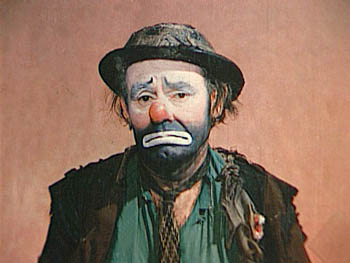
Before we met with the agents, we attended a mandatory prep session, where a faculty member gave us a crash course in the art of the pitch.  My memories of these instructions are hazy, but the gist was that a pitch was supposed to be a couple of sentences, tops, and yet somehow encapsulate the whole whirring carnival in which I’d installed the better parts of my soul.  It was, in fact, virtually the same exercise from that long-ago playwriting class, only this time, instead of inventing a story, I was meant to explain one already in progress.  It might have crossed my mind that the task should seem less puzzling to me by now, that perhaps my befuddlement indicated a lingering gap somewhere in my knowledge, but I did my best to ignore these thoughts.  Instead, I called bullshit, decried “selling out,” and told my significant other that I planned to start my conversations with agents by saying, “I’m obsessed with clowns” (a worthy profession of which my protagonist numbered).  He gently suggested I might want to try harder to appeal to the “clown neutral” reader, and I grudgingly set about cobbling together a less off-putting introduction to myself and my life’s work.
 
I still say that if you find this guy "scary," you're out of your freakin' mind.

It didn’t occur to me at the time that asking a writer to convey, in words, what her book was “about” might in fact be a perfectly reasonable question.  It didn’t occur to me that, perhaps, it was important for the writer to know the answer to this question herself.

Monday, January 31, 2011

Life After the MFA


Believe it or not, I didn’t disappear for more than a month because I was charged with the felony cyberbullying of James Frey. Nor have I abandoned the blog to enter the high-stakes world of corporate events planning under an alias. I haven’t spent the last several weeks trapped in a wine cellar with zero access to wi-fi – though wouldn’t that be nice? – nor did I embark on a voyage of personal discovery and ingest a rare tropical parasite in the process. Instead, after a flurry of houseguests over the holidays, and quite a few flurries of the meteorological variety, I’ve been spending most of my time doing what I’m doing right now: typing on a little red laptop on a big red couch.

I’ve been working on a novel, to be more specific, and I’ve been able to focus on it lately because at the end of 2010, I took a step even less advisable for an unpublished writer of uncertain talents: I quit my day job. Now before you call in the calm young men with the restraints, let me explain that I don’t have any illusions that I’m going to be able to support myself with my fiction, now or in the future. Like most everyone, I have dreams where the zombie of Maxwell Perkins and the werewolf played by Danny DeVito in Big Fish hand me a giant check and fireworks implode backwards in the sky and an ostrich with a human face raises her head out of the sand and whispers, “You’ve arrived.”

Also, this guy blurbs me.  Admit it, you’ve had this dream too.

Realistically, though, I know that’s never going to happen, and in a lot of ways my decision to join the ranks of the funemployed had nothing to do with writing at all. But at least temporarily, my newfound free time has given me an opportunity to recommit to my creative work – something that would have sounded like unnecessary bullshit to me a few years ago.

Because I made this decision already -- on several occasions, in fact, but most recently and dramatically in my decision to spend two years and a not insubstantial chunk of change to attend an MFA creative writing program conveniently located near the diseased but still-beating heart of America’s publishing industry. At the time, I certainly hoped this would lead to something unspeakably glorious, like a book deal or admittance to some eternal Barthelmian conservatory, but at the very least, it seemed like the choice would stick – that forever after I would walk through life as a WRITER, the brand upon me like some mark of Cain that doubled as a hand stamp for readings at bars with a cover.

Then three years after graduating, I found myself crouched under my boss’s desk, muttering curses at a broken printer whose orange error light glared like the eye of Sauron, wondering what the hell had happened to me. I’d changed, seemingly overnight, into someone I hardly recognized. In grad school, at the beginning of the semester, classmates would greet me with, “How’s Bernie?” – asking after the protagonist of my first novel as if inquiring about the health of my son. Now I rarely told people I wrote fiction at all. I’d become cynical and witty, or at least snide, on the subject of publishing; a daily reader of Publisher’s Marketplace, I watched trends roll through the industry, as boring and unavoidable as weather, but the deals that cut me to the quick were the rare few that sounded like books I could have written if only I could really write. Instead, I felt like a study in existential inauthenticity, pouring my intellectual energy into rigorous, vehemently argued reports for work or comments that went ignored on strangers’ blogs, then staring at my own latest Big Project in stunned despair. I’ve rarely identified with a character as much as Oona Lazlo in Chronic City when she discovers her best work will never be published, not even pseudonymously: “Apparently, I’m who you enlist when you’re selling out in this town.” I also felt like I was ghostwriting someone else’s life, and badly.

I’m not describing all this to elicit sympathy – as the expression goes, when you make your own bed you have to lie on it, curled helplessly in a fetal position and praying morning never comes. I’ve known writing was a tough racket, theoretically, since I was old enough to attend poetry readings in my hometown, where thinly veiled suicide threats masqueraded as verse and the espresso machine was louder than the microphone. But I have to say that I think the post-MFA slump has been the toughest test of my resolve so far, and I don’t think that I’m alone in that.

So the title of this piece doubles as a call for comments – for those of you former MFAers out there in blogland, what have you done to hold onto your discipline, your sense that the work you’re doing is important, even/especially when success didn’t come easy? And what, if anything, could MFA programs do to better prepare fledgling writers for what they face afterwards? I’ll plan to talk about both those subjects in future posts.

Friday, October 29, 2010

Degree of Difficulty, pt. 2

When given the hypothetical choice between the superpowers of flying and invisibility, I have always, without hesitation, chosen invisibility.  Although flying would be wonderful during rush hour or late at night when subway service is spotty, there's something both profoundly appealing and alluringly disturbing about knowing what people really think of you -- what they say when you're not around.  It's partly for this reason, I think, that I have always loved the writing workshop.  Although most (or at least some) participants act aware of the writer's presence and her feelings when discussing a story draft, the conceit of most workshops I've attended is that the writer is in "the booth" for the period of the discussion.  Though she can see and hear the conversation, she can't take part in it, can't spring to her work's defense or agree with a certain reader's interpretation.  The purpose is not for the writer to intrude into the reader's experience of her story, but to eavesdrop on it: to find out what exactly the piece communicated, and what it failed to get across.

Writing workshops have been an invaluable part of my development as a writer. Probably the best two years of my life were spent in grad school, where my fiction was alternately attacked and devoured by a ravenous pack of wild intellectuals; I still wear their scars with pride.  So, as part of a self-imposed campaign not to drown myself in the Central Park reservoir before I turn thirty, pockets weighed down with candy corn, craft beer caps, and zip drives containing my unpublished oeuvre, I recently decided to sign up for an extracurricular writing class conveniently located in my nabe.  I lucked out big time: it's an excellent group, and the reads on my work have been generous and thorough.  But returning to that Conference Table of Broken Dreams (because that's what a flawed story is, isn't it? a broken dream?) after three years' absence has gotten me thinking about difficulty again, and the way it's addressed in the academic environment where so much debut fiction starts.

The writing workshop is, by its nature, biased in favor of the short story.  A short story can be submitted in a lone chunk, read in one sitting, and discussed in its entirety during a single session.  Although the draft of a story may be rough and the reading experience may involve an overtly critical approach (line-editing, etc.), the experience of reading and talking about a short story in a workshop is basically pretty similar to the way students would read and talk about a short story anywhere else.  To workshop a novel or novella, on the other hand, requires a bigger leap.  Split into twenty or thirty page chunks, the story is automatically digested differently than if it were presented in whole.  A major factor in my experience of a novel, for example, is, "How fast did I feel compelled to read this?"  The speed with which I'm propelled through a book isn't necessarily proportional to my enthusiasm for it (I read Room and The Magicians each in under two days), but it is a major part of the experience for me, something I nearly always mention when describing a book.  Yet this large-scale momentum isn't something that can even be considered in the workshopping of a novel.  And neither are other "macro" factors, like themes, image patterns, arc, or -- perhaps most important for our discussion here -- formal structure.

Because that's where the question about difficulty comes in.  Like the Philistine who stands too close to a pointillist painting and then complains about seeing nothing but dots, a workshop student may find himself stymied by excerpted sections of a novel that, viewed in the context of the entire work, might serve an obvious structural purpose.  Then again, they might not.  But given simply an isolated span of pages, he has no way to know.  So novels, regardless of the extent to which they're innovative, are frequently perceived in workshop as more "difficult" -- more mysterious, unknowable, tougher to judge -- than even experimental short fiction.

This is of course a fascinating contrast to the perception of difficulty by consumers of books, who (as the publishing industry knows all too well) seem to regard short stories with the same enthusiasm they normally reserve for spam email, but who occasionally deign to set aside their magic glowing Etch-a-Sketches for tomes like Freedom. (Those who aren't reading it on the Etch-a-Sketch, that is.)  Maybe the reason for short stories' unpopularity isn't difficulty per se, but it's certainly something akin to it.  Short stories, as a form, are characterized by qualities like compression and elision.  For them to hold together, every element, sometimes even every word, has to serve a function.  Stories, in other words, present a conundrum for many modern readers, in that their "blink-and-you-miss-it" aesthetic requires intense concentration.  Although stories take much less time to read than novels do, they demand a different kind of time, ideally uninterrupted and sustained, and a reading style that hones in on detail and language over plot.  And when you add formal experimentation into the mix, many readers will panic, thinking they've picked up a book of contemporary poetry by mistake. 

Don't let this be you.

But I don't mean to make fun.  Reading a short story is an intellectual sprint, and not every jogger is good at sprinting.  (I can enjoy a nice leisurely power walk, myself.)  What I find interesting, though, is the fact that many readers, who are not writers themselves, who would never pick up a short story anthology or collection or a literary journal, or even flip to the fiction section in the New Yorker -- let alone formulate impassioned opinions about what was printed there -- manage to tackle and (in book clubs and other forums) actively discuss contemporary, formally complex novels like The Time Traveler's Wife or Middlesex.  By keeping their focus on the big picture, these non-writer readers glide over and see beyond the smaller stumbling blocks that become the exclusive and intensely debated focus of so many workshop discussions...and that sometimes derail authors midway through a manuscript.

Difficulty certainly is in the eye of the beholder -- that's an obvious enough point and one that I made in my previous post about this subject.  But difficulty is also in the means of transmission (short sections versus the complete manuscript) and the speed at which the work is consumed.  Plus, there are doubtless other factors, too.  So tell me, kind readers, what adds to your perception of difficulty in a piece of writing?  What takes away from it?  And if you could either fly or be invisible, would you still bother with reading at all?

Friday, September 24, 2010

Deviant Art

I've always envied cartoonists.  Not animators -- their frame-by-frame slaving sounds like a variation on that old childhood punishment of writing an apology over and over until the words become meaningful only as a carpal-tunnel ache -- but graphic novelists, comic book artists, whatever you want to call them.  I loved newspaper comics as a kid, Calvin and Hobbes and the Far Side especially, as well as collections of one-panel wonders from The New Yorker magazine, the old ones by Thurber and Charles Addams.  As an adult, I read comics less often than I used to; with the exception of Watchmen, I haven't tackled any of the big series in the superhero genre, and I only read a graphic novel every once in a long while.  But the directness of the medium, the way it combines cinematic visual techniques with the one-on-one intimacy of an author's connection with a lone reader, still fascinates me.

A few months ago, I read Black Hole by Charles Burns.  I borrowed it from a friend, consumed it almost immediately, and then hung onto it for a long time, thinking I would write a blog post about it.  Obviously I never did, and this post isn't primarily about it either.  But today, thinking again about my ongoing discussion about difficulty, some of the images from that book sprang to mind.


Black Hole tells the story of a group of teenagers in the 1970's, beset with a mysterious STD that turns them into freaks: a girl sheds her skin, a boy develops a tiny talking mouth on his neck, and others contract maladies even more difficult to encapsulate in words.  This is pulpy, suspenseful, and compelling in itself, and if Burns relied on the bare bones of the story to carry us through, I'd probably still have kept turning the pages.  However, what he does is a lot stranger.

When reading the book, I was at first inclined to think that the disease the teens suffer from is meant to represent something from our world, most likely AIDS.  But by the end, I became convinced that Burns is not working metaphorically, using one set of images to stand in for another set that the reader can supply.  Black Hole, instead, is about the hidden connections between images: the way an incision in a frog's belly or a cut on the sole of a foot looks like a vagina, the way a tail resembles a penis.  And as the book goes on, far from becoming easier to parse, these connections multiply.  Objects -- bones, pipes, sandwiches, snakes -- stream across the pages, freed from their original context; panels break out from their orderly grid.  We're no longer decoding symbols.  The meaning of the objects clearly can't be divorced from the particular way they're depicted.

This is something we're more inclined to accept in visual art than in narrative.  Perhaps it's because of the way literature is taught: at least at the places I attended, most American schoolchildren grew up thinking that it was possible to figure out what a poem "really meant," what a story was "about," and articulate this without the work's meaning being lost, as if literature were simply a foreign language they were learning to speak.  Stylistic embellishments stood as obstacles in the way to understanding, an odd regional accent that made the speaker's words tougher to translate.  "What is Wallace Stevens trying to say here?" one high school teacher said of the poem "Anecdote of the Jar," facing a classroom of dead silence.  He sighed, deciding to give us a break.  "All right, I'll just tell you: it's about environmentalism." 

Yet, with visual art, the work qua object is not so easily dispensed with.  Words can describe a painting or sculpture, but even a nine-year-old knows they cannot replace it.  And thus, even if the technical aspects of the artwork -- the perspective, the composition, the colors -- are perceived to be unpleasant or disagreeable, difficult, they're still treated as part of the thing we're seeing, rather than something that prevents us from seeing that thing clearly.

Perhaps, though, the popularity of graphic novels (at least sophisticated ones like Black Hole) can serve as a bridge between these opposed ways of seeing visual art and narrative.  Wouldn't that be nice?

Thursday, June 3, 2010

Writing in a Material World, or: When Wishing Makes It So

At the end of the children's novel The Neverending Story by Michael Ende, the kingdom of Fantasia has been destroyed by the Nothing, an all-consuming force that literally obliterates everything in its path. But a scrap of hope remains in the protagonist Bastian, a confused kid who got sucked into this magical land by reading about it in a dusty old book. Moon Child, Fantasia's empress, appears before him and explains that the future of her kingdom is in his hands: "Fantasia will be born again through your wishes, my Bastian. Through me they become reality." Bastian asks how many wishes he gets. Moon Child replies, "As many as you want -- the more, the better. Fantasia will be all the more rich and varied." In the face of this unlimited freedom, Bastian chokes, his mind suddenly blank, and Moon Child grows concerned. If he can't think of anything, she warns him, "there won't be any more Fantasia."

I will use any excuse to put pictures of cute dogs on this blog.
You do not have to be Gilbert Sorrentino to detect some metafictional hijinks going on in this passage. Back when I read it, circa 1993, I still licked "scratch-and-sniff" stickers to see if they tasted as good as they smelled and considered non-matching socks a couture fashion statement. Yet even I could see a glimmer of something self-conscious here, a statement about the make-believe aspect of the book's own fictive universe. This was the first, and perhaps truest, lesson I absorbed about the nature of the writer's task: that the more wishes you make -- the more images and characters and scenarios you articulate in language -- the richer your fantasy grows.

Around the same time, I remember thinking hard about the lyrics of "Hark the Herald Angels Sing," a chart-topper during our Advent-season chapel services in my Christian school. In one of the later verses, there's a line that goes, "veiled in flesh the God-head see/hail incarnate deity," referring, of course, to baby Jesus's grand entrance through the fabled virginal meat curtains. There was something I found particularly entrancing about the words "veiled in flesh," the same kind of twisted logic I associated with another favorite at the time, Alice's Adventures in Wonderland. After all, in reality, a veil hides something visible -- usually flesh, in fact. But if the flesh itself is a veil, what does it conceal? Isn't the bare flesh, by definition, naked? If you stripped the flesh (and blood and bone) from a person, what would be revealed? Wouldn't you just be left with nothing? Or at the very least, nothing you could sing about?

Religious folks would no doubt have a smart answer to this question, but I'm not religious and I never claimed to be smart. And I'm not trying to make a religious point here, but an aesthetic one, which is this: in a piece of writing, there are two forces, the force of Something and the force of Nothing. Something is just what it sounds like: it's the stuff of the world and the imagination, falling out onto the page. Something is made of images, characters, names -- it's flesh. You can claim there's a god* under there somewhere, but you'd be hard pressed to see him if there wasn't skin on top. Then there's the force of Nothing. Nothing doesn't have to be a bad thing, and in fact, it's essential at the beginning of a project. Nothing is the whole roaring universe of possibility. In a way, I could just as easily call it the force of Anything, since the beauty of Nothing is that it doesn't preclude any choice the author can make. The problem comes when, like Bastian, the author freezes in the face of this dizzying array and finds himself unable to choose -- unable to veil his god in anything the reader can see.

I'm saying all this before returning to the subject of my last post because, to me, these ideas are all connected with the act of naming, not just characters, but the stuff of a character's world. One way that the Nothing can win is obvious: it's writer's block, when the author finds himself unable or unwilling to choose a single path from amid the myriad that present themselves. Thomas Mann once said, "A writer is somebody for whom writing is more difficult than it is for other people," and while that sounds like a pretentious bullshit excuse for drinking during the day, there is a grain of truth to it. The more a person reads and writes, the more possibilities and approaches appear, and the larger the Nothing becomes. But the second way the Nothing can win is more insidious, occurring within the work itself.


When I was in a writing workshop during college, we read a couple of student stories where the gender of the first person narrator went unspecified. The class was somewhat divided about whether to regard this as a problem or not, and rightly so. There are certainly times when ambiguity -- about gender, race, etc. -- can itself be a distinct and provocative choice. But I remember being bothered at the time not just by the fact the genders were going unstated, but by the attitudes of some of the students, including the author of one of the stories, who said it "didn't matter."

On one hand, of course, this is inarguably true: it's not as though fictional characters are real people who will eventually be faced with, for example, having to choose the men's or women's restroom in a crowded movie theater whether the author likes it or not. But the author's willingness to relinquish such a basic aspect of her own creation, not out of hopes of making a statement but simply out of apathy, needled me deeply. One might suggest, of course, that I'm misreading the statement, "It doesn't matter." Perhaps the author herself believes gender shouldn't matter, and wants that attitude to be reflected in her fiction, by creating a world where it doesn't. Even if this is case, though, the author still has to sketch in that world for us, because it's a place no one currently living on earth has ever visited. Alternately, one might suggest that the narrator's gender doesn't matter to the narrator. Yet if the narrator's gender does not matter to the narrator, the fact of regarding oneself as genderless in a gendered world is an interesting enough character trait to merit the story's attention.
Again, I'm not arguing that there aren't times when ambiguity isn't the most powerful choice. But a writer can't use that as an excuse to avoid making a choice at all. The problem here, I think, is that when writers see an opportunity not to make a decision, not to pin something down, they often seize it. To paraphrase Yogi Berra, if they see a fork in the road, they take it. And this goes not just for student writers, but a lot of published ones too. A favorite teacher of mine once sadly observed, "In contemporary fiction, nobody has a last name or a job." It's worth wondering why not.


*I use "god" here as a stand-in for any intangible quality of fiction — its "heart," its "soul," etc.

Saturday, May 22, 2010

When Every Genre is a Mystery

On the bad days, and there are many, it feels as though my work in publishing is little more than the meaningless toil of a miner, extracting salt from lightless, haunted caverns to rub in authors' wounds. The goals of the industry are not the goals of literature; this should be plainly apparent to anyone with a working knowledge of capitalist economics and a local Barnes & Noble, yet somehow it continues to surprise me almost daily. At these moments, it comforts me to think on academia, that faraway Elysium to which publishing's deserving works one day ascend. I turn my thoughts especially to creative writing programs, where, in my rosy recollection, aspiring wordsmiths read and engage with the works of both classmates and published writers whose books challenge their preconceptions and push the boundaries of their imaginations. (I also fondly remember donut holes in the student lounge.)

At these rhapsodic moments, it's easy for me to forget that, like celeb-courting publishing houses (OMG Sarah Silverman!), academia can present its own set of arbitrary biases -- a fact that was brought to my renewed attention today in a conversation with a friend who's currently attending a graduate program elsewhere in these United States. He mentioned that there's been an ongoing debate in his department, ever since a graduate teaching colleague piped up in a group discussion about the writing "don'ts" she offers students in her creative writing class. Horrified by an onslaught of Twilight copycats (aren't we all), this teacher added a note specifying that she does not allow "vampire fiction" in the workshop she's teaching. Many others promptly chimed in, agreeing that they specify that their students are not allowed to turn in, variously, sci-fi, fantasy, romance, and even, most vaguely, "genre" fiction in their work for the courses. Their arguments in favor of this strategy seemed to fall into a certain pattern: I don't know enough about this genre to teach it; I can only help my students if they write in the genre I know.

This is the kind of anecdote that makes me want to crawl into bed with a copy of Gun With Occasional Music and a bottle of bourbon, in hopes that I will awake in a more just world. Because this teacher and others like her are committing not just one grave injustice but two.

The first and more obvious injustice these teachers are committing is against the writers of, variously, sci-fi, fantasy, romance, and anything else that could be considered a "genre." When I say "writers" here I mean both the student writers who have the misfortune to study under them, and in a larger sense, the published writers working in these genres who are established masters of their craft. Dismissing an author's work sight unseen, on the basis of subject matter alone is, to put it plainly, stupid. It means discounting novels by Cormac McCarthy, Kazuo Ishiguro, Susannah Clarke, Jonathan Lethem, and Lev Grossman, just to name a few whose work I've specifically discussed on this blog. But even when the work in question isn't artistically ambitious, the knee-jerk treatment is deeply unfair. If the issue is that student writers are transparently copying the work of another (bad) author, why is it worse for them to copy Stephanie Meyers than the knock-down drag-out wretchedness of, say, Nicholas Sparks?

Put some fangs on this bad boy and you're good to go.

Isn't the teachable moment here a) that a story should be original, inspired by some unique combination of multiple literary influences and the author's imagination/personal experience, and b) that these kids should go on reading stuff that excites them, but maybe better stuff? I'd be thrilled to be the first to shove a Kelly Link collection into their nimbly texting little hands. You want monsters? I'll give you monsters like you've never seen.

The second, and perhaps graver injustice perpetrated by these teachers, though, is against "literary writers" like themselves. Because here's the thing: when a teacher (any kind of teacher) says, "I have nothing to teach someone like you," students tend to believe him. Saying, "I don't know nothing about writing no vampires" implies -- in fact states -- that the realm of literary fiction is so narrow, so impoverished, that its techniques and practices cannot address anything outside of almost cartoonishly limited parameters. It implies that literary fiction is an endless repetition of scenarios and characters that must fall within certain pre-defined categories, again and again and again; that any departure from the familiar will be met with discomfort and distaste. It suggests that literary fiction is itself a mere genre, not an organic, evolving art.

And it suggests that the practitioners of this Literary genre, as represented by the teacher, are in fact even dumber than the vampire-writing student himself. After all, in order to reach the college writing workshop the student in question has no doubt had to read and at least partially comprehend works of literature in the teacher's "genre." The teacher claims that he has been unable to do the same toward the student's. But unlike the student, who is busily perusing the syllabus for a brand new course, the teacher is unwilling to learn.

This paradigm is all messed up, for a lot of reasons, but what bugs me the most is the deep confusion it fosters. "Literary" is not a genre. "Literary" is a term of approbation, a way of suggesting that the work in question aspires to the condition of art, of "literature." And a work of fiction in any so-called "genre" can achieve this, so long as it rigorously pursues its own peculiar aims. Books and stories that fail to be literary fail because they fall into lazy postures, blindly following set conventions without questioning or exploring them. I understand that it must be frustrating to read dozens of stories that exemplify this laziness in the exact same way ("The sparkly vampire gently caressed her boob..."). But if a teacher wants to educate young writers about alternatives to writerly laziness, I don't think pedagogical laziness is the answer.

Monday, May 17, 2010

Making History

I don't often read nonfiction; in general, I find almost anything preferable to reality. However, Jame Loewen's thought-provoking 1996 revisionist text managed to snooker me in with its seductive title: LIES MY TEACHER TOLD ME. Although it's filled with surprising information about famous American figures from John Brown to Helen Keller, this book is not primarily a history of the United States. Rather, it's a book-length book review of twelve of the crappiest works of nonfiction imaginable: a representative sampling of high school American history textbooks.

Let me backtrack for a second here. When I was a teenager, I attended (and eventually dropped out of) a conservative religious high school in the Midwest, the kind of hell where a boy with a ponytail gets sent to the principal's office and a girl with a crew cut gets sent to a guidance counselor. Pep rallies were mandatory, and they looked like this:

The Anti-Sex League was a popular alternative to cheerleading.

In short, I hated nearly every minute I spent enclosed in those ironically god-forsaken halls, and the classrooms were even worse. But one class I didn't entirely detest was AP American history. Our teacher was a tremulous-voiced madman so powdered with chalk dust he looked like he'd just survived an explosion, and he addressed us as "children," but with a tone of urgency that suggested not storytime but the last hope of mankind. His lessons on the innumerable tariffs, bills, battles, and Presidents whose progression informed the weekly quizzes were engaging enough, if only because of his forceful way of starting class discussions -- "Children, children! What do you think of this?!" -- but he really came to life on Fridays, when he allowed himself to indulge his passion: conspiracy theories about the Kennedy assasination. To start us off on these paranoid diversions, he always brought in photocopies of what he cryptically referred to as his "documents": telegrams, letters, redacted newspaper articles, photographs, receipts, and an array of other primary source materials, generally involving Lee Harvey Oswald, Jack Ruby, LBJ, Kennedy himself, Nixon, or the Cubans. What made these sessions fascinating were not the particular half-baked theories we cooked up as explanations during the discussion, but the sensation that we were actually doing history: that he was empowering us to parse out for ourselves an interpretation of primary sources, and that our conclusions might be as valuable -- even more valuable -- than anything already published in a book.

Part of the reason I found LIES MY TEACHER TOLD ME interesting is that Loewen does not set out simply to set the record straight about common historical misconceptions. His larger and more important project is a rethinking of both the way historical narratives are presented and the pedagogy surrounding these narratives. Loewen isn't as much worried that high schoolers don't know "the truth," but that they don't care. Again and again, he points out something that's obvious to anyone who remembers their high school history textbook (and probably even more obvious to those who don't): these books are boring. Before textbook authors can even begin to redress the grave omissions -- and there are many -- they must first learn to write. As Loewen puts it, "Textbooks unfold history without real drama or suspense, only melodrama." Figures from Christopher Columbus to Woodrow Wilson are subjected to what he terms "heroification." In an attempt to cast them as aspirational role models, authors strip them of any potentially controversial qualities, and they become one-dimensional, featureless, indistinguishable figures in an endless parade of feel-good Americana. Positive changes in American life and culture never meet with government (or popular) resistance; progress moves inexorably forward. Events are causeless, struggles without visible opposition, and the outcome -- American triumph -- is never in doubt. This happens again and again in the passages Loewen quotes, even at the level of the sentences, when the authors use the passive voice. It's not just that the books are inaccurate; they don't ring true, because they ignore the significance-making conventions of traditional storytelling -- even more specifically, of good fiction writing.

Potentially, I think this claim is far more earth-shaking than the more specific critiques Loewen advances about the content of sections on slavery, the Vietnam War, and the Pilgrims. It seems to me that if we truly see history as a series of stories we tell ourselves about the past, then it becomes something that can -- and should -- aspire to the condition of art. But, many people would argue, isn't that just total relativism? Are all interpretations created equal? If a "better story" makes for "better history," then can't just anyone be a historian?

The answer, of course, is both yes and no. For something to qualify as history rather than a novel or re-imagining, it obviously must be based in research and verifiable evidence. But beyond that, I do think we should hold history, along with other forms of narrative nonfiction, to the same standards as fiction. It's not enough for a textbook, revisionist or traditionalist, liberal or conservative, to reproduce names and dates for our perusal. It must transform that material into something meaningful, or else it teaches us nothing worth knowing. In a scene from the Steve Martin play Picasso at the Lapin Agile, the character of Albert Einstein offers that his profession is just as concerned with beauty as any artist's: "...the theories must be beautiful. You know why the sun doesn't revolve around the earth? Because the idea is not beautiful enough. If you're trying to prove that the sun revolves around the earth, in order to make the theory fit the facts, you have to have the planets moving backwards, and the sun doing loop-de-loops. Way too ugly." Picasso asks him, "So you're not just describing the world as it is?" and Einstein replies, "No! We are creating a new way of looking at the world!" I would submit that students should learn to see history the same way: as something made, by and for the human mind.

Monday, October 19, 2009

Je Ne Sais Quoi

In my first-ever writing workshop, the teacher had one rule for our discussions: you were not allowed to lift your eyes from the story's pages.  Any comment you made had to be a comment about something that was literally printed in the text.  A story is made up of words, and he felt that any criticism or praise of the story had to be criticism or praise of those actual words.  This seems obvious, but at least to me at the time, it was a revelation.

The craft of writing is not mysterious, or at least it is not inherently mysterious.  Words have definitions.  Sentences have grammar.  Paragraphs are long or short, have sentence variation or they don't.  And, at least in conventional fiction, story structures have a kind of grammar too (see my posts on the film A Serious Man).  Yet somehow, many readers feel that something in fiction is indefinable, that it can't be pinpointed, that it somehow exists beyond the words on the page, and that to look at it too closely can cause it to vanish. 

I am of two minds about all this.  A workshop professor who espouses such a view makes me about as nervous as a surgeon who's worried about cutting into a patient's soul.  But at the same time, I think we've all had moments when we scribbled something down, and though it wasn't yet ready for another reader's eyes, we knew we had found It, that spark that brings a piece of prose to life.  What's the deal with that?