Showing posts with label Zack Snyder. Show all posts

Thursday, April 7, 2011

In the Realms of the Unreal

Before I went to see Zack Snyder’s new film Suckerpunch last weekend, I watched the trailer – for the fourth or fifth time and in my usual state of fist-pumping enthusiasm – ostensibly for the purpose of showing a friend who’d agreed to come along what we were in for at the local Imax. Amid my exclaimed profanities and endorsing narration (“Look at the composition of that shot! And that one! Also: zeppelins?!”), he managed to get the gist of the preview, and said, once it was over and he could get a word in edgewise, “It’s a little like Henry Darger, don’t you think?” To which I squealed, “Oh my god, you are so right!” and nearly keeled over from the sudden rush of ticket-buying endorphins flooding my bloodstream.

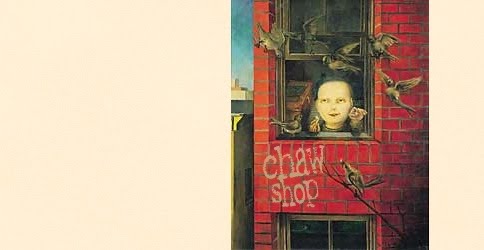
Frequent readers of this blog will know that my affection for Zack Snyder is matched by few things, and one of those things is my passion for Henry Darger, the Chicago janitor who, working in total solitude, spent decades of his life creating a mammoth illustrated novel entitled In the Realms of the Unreal. This volume tells the story of the Vivian sisters, blameless children fighting a battle in a magical, Narnia-like realm against a confederacy of male evildoers wearing what Darger described as “college-professor hats” (mortarboards). My buddy was right on in seeing the parallel between this vision and Snyder’s admittedly juiced-up fantasy of Lolitas in peril. Darger’s postmodern visual technique involved pulling images from everywhere in commercial low culture – advertisements, coloring books, magazine illustrations, tabloid photos – via tracing, collage, and later, photo enlargements for inclusion in what was a bizarre, obsessively personal world. The sisters in particular were cribbed from clichéd paradigms of girlhood innocence, cloying figures wielding beach buckets or cowgirl hats while all around them, apocalypse unfolded. Replace Darger’s newspaper comics and Coppertone girls with anime, graphics-heavy videogames, classic sexploitation, and some back issues of Heavy Metal, I figured, and you’d be looking at something like Suckerpunch. In both cases, the characters the story follows are paper dolls, flat and familiar to the point of near invisibility. The mind we’re actually exploring is the creator’s – Darger’s and Snyder’s, respectively.


In some respects, Suckerpunch did not disappoint this expectation. The movie is fucking gorgeous, for starters. In four of the movie’s set pieces, we watch Baby Doll (Emily Browning, looking like the platonic ideal to which so much plastic surgery aspires) duking it out with clockwork samurai, steampowered doughboys, dragons, and a monorail full of robots. With enough money, anyone can film gadgets and explosions (and anyone has), but Snyder has a deep understanding of the choreography of fight sequences, and a painter’s eye for the panoramic landscapes in which they play out. As four music videos – or more accurately, silent films, since they each outlast the duration of a single song – these would be rococo, ridiculous delights.

The trouble, for me, comes from Snyder’s attempts to cram the dodecahedron of his imagination into the square hole left by recent Hollywood successes. I’m speaking here of that inconvenient thing: the movie’s screenplay.

If, unlike me, you weren’t too distracted by the trailer’s pulsating soundtrack or its images of badass dragons to see the warning signs, you’ll have gathered that the story’s frame concerns a mental institution from which our heroine wishes to escape. Her attempts are psychotically reconfigured in her ailing brain, first into a strip club/whorehouse and then into the action numbers described above.

This frame is a regrettable choice for a couple of reasons. First, it necessitates a series of scenes in which Baby Doll and several other characters talk. Let me be perfectly clear on this point: none of these characters should speak. Ever. It is totally unnecessary and invariably embarrassing when they do. I’m not maligning the actresses, who do the best they can with dialogue that sounds like it came from a cut scene in Panzer Dragoon Orta. But, if their sexy goth Halloween costumes discouraged us from imagining these women’s inner lives, their conversations confirm they have no inner lives at all. In Snyder’s masterpiece Watchmen, I considered the over-the-top obvious exchanges (“What happened to the American dream?” “It came true! You’re looking at it!”) to serve the same purpose that the superhero stances on window ledges or in fiery hallways did: the characters were striking poses, iconic ones, that served to define something significant about themselves. But in Suckerpunch, to put it bluntly, the dialogue is boring and meaningless. While writing this post, I referred to IMDB in hopes of finding some “memorable quotes” from the film to cite, but except for the fake-mysticism twaddle from the movie’s inexplicable voiceovers, even that resource seems to consider most of what these ladies say eminently forgettable.

Because Baby Doll is not believable as a character with an inner life, period, Snyder exacerbates the second and larger problem with the story's frame. It’s effectively impossible for the movie’s stunning dreamscapes to have originated in her mind. According to the production materials, the mental institution is supposed to be set in rural Vermont in the early 1960’s; because of the sepia tone, Edward Gorey-esque set design, and our heroine’s vintage sailor dress, I pegged it for even earlier. Regardless, though, the story comes from an era prior to the vast majority of the film’s many allusions and centers on a character who, as far as we can tell, is ignorant of all of them. Let’s be real: why would an orphaned cutie in New England during the Eisenhower administration fantasize about destroying androids with a samurai sword? Why would she imagine racy dominatrix outfits for all of her friends? Why, in fact, does the story that she tells herself have the structure of a videogame?

And most importantly, what does it add to any of this imagery to claim she’s the one behind it? Ultimately, this is where I got stuck. The visual world of this movie is interesting precisely because of what it suggests about the imagination behind it, an imagination saturated in the popular culture of the last 50 years. Suckerpunch has been polarizing for a reason: just as Darger’s obsession with the Vivian girls’ courage and virtue led him to create exceptionally disturbing images of violence against children, so does Snyder’s apparent girl-power message contain an immutable gender binary and a prominent rape fixation. Where is that voice coming from? Claiming it’s all in Baby Doll’s head feels like a cop-out, one that insults the intelligence of the viewer – or, alternately, suggests that Snyder has no idea what his picture is really about.

I’m not saying that’s the worst thing. Artists don’t always know what they’re up to, or where the dark heart of their material lies. I claim to love Darger, but I’ve never read the thousands of pages of fiction that accompany his dazzling paintings, and I probably never will. It’s certainly possible to enjoy the action sequences in Suckerpunch as the stunted masterpieces that they are and ignore the rest. But if Snyder wanted to make a full-length film with this material, and supply it with an accessible emotional and psychological arc, I would have suggested he take a page out of Charlie Kaufman’s book and insert himself – or a character like himself – into the picture. By doing that, he would have foregrounded what’s unsettling and original about the movie by making us complicit: sympathetic with the type of male gaze that condemns lechery and sexual aggression while only calling women by their stripper names, with the form of escapism that celebrates bloodless violence without consequences. And even more than an icepick, that’s the kind of thing that sticks in a viewer’s mind.

Monday, October 11, 2010

It's a Zoo in Here: Animals in Fiction

When I was a child, one of my earliest lessons about fiction was on the component parts of a story: the primary ones hit upon were conflict, setting, theme, and characters.  Our teacher explained that "characters" were the "people" in a story, the actors who either caused the action or suffered the consequences of it.  I immediately raised my hand to ask if stories that featured only animals were then in fact stories at all.

Obviously, as my second grade teacher explained to me then and as I am well aware now, personified animals or even inanimate objects (from Toy Story's Woody to Asimov's robots to Pynchon's Byron the Bulb) can just as easily function as the protagonists and antagonists in fiction as actual living humans can, and many great stories, especially for kids, feature relationships between humans and non-humans front and center.  In stories of this kind, the enchanted creatures become the child's imagination externalized, made flesh, and tend to either mirror the child's thoughts about the adult world (Alice in Wonderland, The Phantom Tollbooth), provide fantastical tests for real-life moral quandaries (The Chronicles of Narnia, the film The Labyrinth), give the child the opportunity to reverse roles and take on the duties of protector or parent (The Indian in the Cupboard, the films The Iron Giant or ET), or supply reliable friendship and comfort while allowing the child to explore his identity outside of the confines of family (Winnie the Pooh, the comic strip Calvin and Hobbes).  In all of these cases, though the creatures themselves certainly have independent goals and motivations, we see them through the child's eyes, and ultimately, we judge them in terms of the effect they have on the child in question.  As much as a reader may like a talking faun or a lovable robot, it's clear she's not meant to locate herself in those characters.  By definition, they are the Other.

We're aware that we see this character through the child-character's eyes.

For that reason, something odd tends to happen in stories where people and their civilization are conspicuously absent: we are forced to identify with someone inherently dissimilar to ourselves.  As a kid, my first exposure to stories of this kind was in Aesop's fables.  Interactions between a fox and a raven or a cat and the mice it pursues were unsettling, not just because of the unmitigated cruelty and violence (no second chances here), but because these animals, unmoored from the context of my world, were deeply unpredictable to me.  One story in particular, the fable of the scorpion and the frog, was especially creepy: a scorpion hitches a ride on a frog's back to cross a fast-flowing river.  The frog is uncertain if it should trust the scorpion not to sting it, but as the scorpion points out, if it stings the frog mid-journey, they will both sink and drown.  Still, in the middle of the river, the scorpion stings his companion anyway.  Why?  "It's in my nature."

What does this mean, "It's in my nature"?  Is the scorpion good or bad, active or passive?  Does a scorpion have free will?  Even as a young child, I knew that humans are sometimes slaves to their own biological imperatives: the need for a bathroom on a road trip, the need for a puke bucket during flu season.  Was the scorpion's need to sting akin to these exigencies?  Or was its need to sting more like the other, less uncontrollable urges I experienced: the temptation to palm a roll of Lifesavers from a convenience store or to break my toys in the midst of a tantrum?  If the scorpion had been placed in a story with a little girl, it would have been clear where my sympathies should fall -- the scorpion would be a villain, or, simpler than that, a mere danger, like a lit stove.  But in Aesop (whatever he may have intended), this clarity was lost to me; try as I might, I couldn't locate myself in either character.  Although the altruistic frog was certainly more lovable within the context of the story, the scorpion's needless cruelty raised questions about him too.  If a scorpion's nature was to sting, then what was a frog's nature?  And if that nature was just a matter of instinct, genetics, not something chosen, then wouldn't his potential for goodness or badness entirely depend on whose perspective the reader chose to adopt?  After all, if a story were told about the frog from the point of view of a fly, the frog would seem inherently evil too.

One of the big complicatons in stories entirely about animals comes with personifying more than one species of animal at a time.  I call this the Animal Farm effect.  In the novel Animal Farm by George Orwell (which does, in fact, briefly feature humans as well, though not in the same way as the kids' stories I described above), a mass revolt against an unjust farmer leaves the animals in charge.  Yet, over the course of the story, the pigs -- originally placed in a management role because they are the smartest of the animals -- take on more and more of the qualities of humans in their interactions with the other barnyard creatures, until finally they are living almost exactly as their human masters once did, inhabiting the farmhouse and walking on two legs while others serve them.  The rules of the farm, which once represented the interests of all, are now reduced to one simple credo: ALL ANIMALS ARE EQUAL, BUT SOME ARE MORE EQUAL THAN OTHERS. 

Orwell, who was using the story to make a statement about Stalinist Russia, clearly meant for us to reject this maxim: the barnyard animals are all sentient, all capable of speech, and thus all equal on the novel's terms.  But I think that "all animals are equal, but some are more equal than others" does reflect something that's frequently true about the use of animals in fiction.  When creating a world dominated by animals, something must still be regarded as the Other in order for the animals' social order to be comprehensible to us -- in order for their life to at all resemble the relationship of human society to the natural world.  Even in Animal Farm, rats, songbirds, and rabbits play this role: the other animals attempt to "tame" them (signalling to the reader that "tameness" is the "humanity" of animals in this scenario) but without success.

The mid-90's Disney film The Lion King, for all its many embarrassing faults (if I never hear the saccharine song "Hakuna Matata" again, it will be too soon), succeeds in this one respect, at least.  With the exception of a meerkat, a wild boar, and a toucan -- all of whom are treated basically as servants and comic relief -- all of the speaking characters are predators, and the prey are basically de-personified.  In one memorable scene, a herd of bison trample a lion to death, not out of anger or a desire for revenge, but because they literally cannot be reasoned with.  They are running out of blind, unarticulated animal fear, seemingly unable to understand or even hear the cries of the main character for help.  For some lions to be "good" and some "evil," for the choices of a lion to have any moral weight, we must first establish that the central nature of a lion qua predator is morally neutral.  And we must do that by making it clear that the story is told from a lion's perspective.

I got to thinking about all these issues over the weekend, after seeing Zack Snyder's fun, gorgeous, and intermittently disappointing kids' feature, Legend of the Guardians: The Owls of Ga'hoole.  After Watchmen (particularly the magnificent, absurdly ambitious, aggressively postmodern ultimate cut version, which I wrote about here, here, and here), I doubted he was going to top himself with a picture about magic talking owls, and unfortunately I was right.  However, moments of this picture are still fucking glorious, beginning with a sequence at the beginning when an owl swoops down to snatch a mouse off a branch and then continues effortlessly in its flight.  There are a few ornithological non-sequiturs throughout (one plot thread asserts that owlets can be turned to zombies by being forced to stare at the moon as they doze off -- a weird idea, considering that the laws of nature and even the film itself firmly establish that the little dudes are nocturnal), and a feel-good musical montage that made the Lion King soundtrack seem as edgy and smart as Sweeney Todd's in comparison.  But the movie's best moments come when we see owls' own natural behaviors unexpectedly invested with emotional import. 

"Branching," when owlets glide from branch to branch while learning to fly, is a little like athletics, a little like driving lessons, yet not exactly like either: it occupies a space in an owl's life not quite equivalent to anything in ours.  And an even better scene (easily my favorite moment in the film), comes when the little sister of the two main owlets hawks up her first owl pellet, a solidified mass of mouse bones and fur that resembles something fossilized.  Panting and traumatized, spittle dripping from her beak, she stares in horror at the thing her body has just unwittingly ejected, while her nursemaid, a dippy snake, bustles around saying things like, "Oh, it's a beautiful day, the day of your first pellet!"  "You mean," the stunned chick replies, voice quaking with trepidation, "it's going to happen again?"  Vomiting up an owl pellet is a little like menstruation is to humans, yet it also happens to boys; it's a bit like losing a tooth, but it never stops, not even in adulthood.  At heart, it's a thing that happens only to owls, and it isn't transformed to parallel directly with human experiences -- but the way they respond to it, socially and personally, seems more or less the way people would, if people were owls.

Sure, they look real cute... until you see the gunk that comes out of their mouths.

In this sense, stories about animals or other non-human characters can be deeply subversive, and not just because they allow the author to veil controversial opinions under the guise of fantasy.  Rather, these stories are subversive because of the way they allow readers or viewers to set aside their own perspective to emphathize with one that, by its very nature, is profoundly foreign, even disturbing or grotesque.  Especially for kids, but really for all of us, that's a lesson that can't come soon enough.

Wednesday, January 13, 2010

Watching the Watchmen, pt. 3

This movie has a bit of Barthelme in it.  Throughout Watchmen, Snyder directly appropriates sound and images from popular memory: the moon landing, the Zapruder film, Dr. Strangelove's war room, Ridley Scott's perfume commercial, Apocalypse Now's potent mixture of Wagner and Vietnam.  Even the scenes that are not in direct homage to earlier sources are made to look like found objects: we see police footage of Rorschach; Adrian Veidt poses for photographs with Annie Leibovitz; Nixon speechifies, live, before the post-apocalypse damage is even tallied.  And when characters break, that happens iconically, publicly, too: Moth Man's institutionalization, replete with flashbulbs; Dr. Manhattan's prime-time freakout.  Televisions are everywhere in this movie, just as print matter (books, newspapers, comics) turned up page and page again in the graphic novel.  The Comedian, minutes from death, flips channels, adjusts the volume; protesters throw explosives through the window of an electronics store glowing with illuminated screens; we hear about Rorschach's arrest and Mason's death from the nightly news; at the film's close, Veidt brandishes "another ultimate weapon": his remote control.  Snyder has adopted the book's technique of collage, but tailored his allusions to work in moving pictures rather than static ones.  The result isn't just that, as he modestly and somewhat repetitiously states on the director commentary, "it looks cool," but that, like the graphic novel, the world of Watchmen the film is an explicitly postmodern world, inhabited by postmodern characters who are aware of their actions not just qua action but as public symbol, metaphor, myth.

The most postmodern stroke of all in the film's ultimate cut, though, is the one that does directly reference comic books: the Black Freighter subplot.  Even after seeing the theatrical cut of the film and reading the graphic novel, I had doubts about the possibility of integrating this story into the film -- though I saw the thematic connections, I wasn't sure what it would really add.  The ultimate cut proved me definitively wrong.  The Black Freighter sequences, executed in vivid (and often disgusting) 2-D animation, aren't just a visual triumph.  If in the book this captain's sordid tale ran parallel to the main story, serving to provide mainly a meta-textual commentary on the nature of comic books themselves, in the movie it becomes something less cerebral: a kind of David Lynchian opening into of the city's troubled mind.  In one scene, the camera zooms on a single panel of the comic -- slowly the waves begin to lap, and we are transported.  Yet the animation, bracketed by a primarily live action film, serves as a constant reminder that the story we're viewing is the creation of someone, that it's the product of a particular psychology and perspective.  And while the graphic novel told us who drew Black Freighter and why, creating a larger context in which the comic functioned as society's mirror, the movie allows us to access the comic's grisly seascape only through the more junior of the two Bernards, whose response to it is nuanced, perplexed, and largely internal.  If Veidt's creation -- a united world -- is meant to be that public and impersonal thing, the greatest good for the greatest number, the Black Freighter is the perfect counterpoint: private, handmade, self-contained, the product of neurosis and obsession, and without a materially positive effect on anyone, yet somehow viscerally true.  It's apt that we see the obliteration of this comic, and this reader, in Veidt's nuclear blast: in destroying the city, he hasn't just wrecked one real world, but the millions of tiny imagined ones carried around in people's heads.

I could spend some time pointing out what's wrong with this film -- the unintentionally hilarious sex scene, Malin Akerman's wobbly performance (she sure is cute though), the dialogue's sometimes clunky exposition.  But none of that interests me nearly as much as the picture's sweeping ambition, and its great success on the whole in realizing it.  The Village Voice once famously said reviewing Mason & Dixon was like "reviewing the Atlantic Ocean"; I'd have to say the same thing about Watchmen.  It's dark, and deep, and sometimes very cold, but it merits a lot of exploring.

Tuesday, January 12, 2010

Watching the Watchmen, pt. 2

I have never liked superhero movies.  I didn't care for Spiderman, Iron Man, X-Men, Superman, or Transformers.  Mystery Men was sporadically funny but mostly stupid.  The Incredibles was cute but silly.  Unbreakable was okay.  Hellboy was dazzlingly bad.  The League of Extraordinary Gentlemen was muddy and incomprehensible.  Except for the brief appearance of an adorable vampire Pomeranian, Blade was interminable.  And though I saw merit in both the Nolan and Burton visions of Batman, especially in their iconic villains, their films as films left me strangely cold.

My favorite supervillain, until recently

I did not particularly want to see Watchmen.  I anticipated two plus hours of latex and explosions, and I'd heard rumors about a giant naked blue guy (a theme that, unbeknownst to the moviegoing public, would be revisited by Avatar later in the year).  I figured it would be crowded, with long lines at the concession stands and teenagers kicking the back of my seat, and that if the comic book's dark ending had been changed, as I'd heard – I hadn't yet read it at the time – the film no doubt would close on a montage of sequel-mongering and sexual consummation.  It sounded like the kind of movie they'd play on flat screen TVs in Circuit City to demonstrate the picture quality.  

All of this changed for me nearly the instant the film began.  A lot of reviewers have commented on the title sequence, in which the lives and, often, deaths of the Minutemen (the original superhero organization in the film) and then the Watchmen are related in brief to the tune of Dylan's "The Times They Are A-Changin."  Obviously, this sequence sets up the tone of nostalgia; by inserting these characters into iconic national moments – VE Day, the moon landing, the Kennedy assassination – the film grounds them historically, in a context already rife with associations, and thus renders them "unforgettable" for viewers. 

But for me, this sequence did something else too.  The film opens with a scene of the aging Comedian thrown to his death by an unknown assailant; if that was followed immediately by Rorschach's ruminations on a possible Mask Killer, the story would have begun on the trajectory of a classic murder mystery.  But by jarring us from that thread right away with a sequence that reveals the forward movement of time to be the world's only indestructible power, the movie forces us to step back, to remove ourselves from the immediate suspense of the situation (The Comedian is dead!  Who killed him?) and read it metaphorically instead. (The Comedian is dead, sure – and so are Silhouette, Dollar Bill and JFK.  So what?  Even the larger-than-life aren't larger than death.)  Structurally, we fall into a Dr. Manhattan-like intellectual remove, reading this story on two levels, the specific and the abstract, almost before it even starts.

The conflict between these two points of view, and the moral consequences of each, is the conflict at the heart of Watchmen.  At the abstract end of the spectrum – get ready for some serious spoilers, folks – is Adrian Veidt, supposedly the smartest man in the world, who literally destroys that world in order to save it:  in a utilitarian calculation that would make Peter Singer blush, he wipes out dozens of major cities in order to bring what he believes will be humanity's only lasting peace.  He is the only main character whose dreams and memories we never access* in the film, and it's an appropriate omission:  to him, the subjective experience of a single life is without intrinsic value.  The only thing that matters is the big picture, the Alexandrian "vision of a united world." 

At the other end of the spectrum is Rorschach, a man whose very name evokes the irreducible complexity of a specific human mind.  Nursing grudges (his enemies list would, heh heh, dwarf Nixon's) and neuroses (his attitudes about sex and hygiene make Ignatius Reilly look datable by comparison) yet unflinchingly loyal to his band of "masks," Rorschach does not believe the ends justify the means.  "Why does one death matter against so many?" he asks rhetorically. "Because there is good and there is evil, and evil must be punished. Even in the face of Armageddon I shall not compromise in this." Like a deranged Kantian, he lives by unshakable moral principles of his own making, hard-won after a lifetime lived in "gutters... full of blood": tell the truth, stick close to your friends, and never compromise.  Though his voiceovers may sound jaded, he's the film's one true idealist, the only one heartbroken by deaths that do not affect him directly.  As he mournfully observes, "A Comedian died last night, and nobody cares. Nobody cares but me."

Suspended between these two polar opposites, of course, is Dr. Manhattan, the one person (notice I don't say human) who might have the power to tilt the balance.  Though paranormally equipped in his perception of reality and time, he can't help but suffer human emotions as well:  loneliness, jealousy, tenderness, guilt.  The internal conflict of these two contrary perspectives comes to a head during his time on Mars, when he tries to eschew his humanity entirely by seeing reality only through the abstract.  He tells Laurie there is no point in saving life on earth from nuclear holocaust – "The universe will not even notice" – but then promptly changes his mind when presented with the unduplicatable fact of another human being: her.  Observing the bizarre circumstances of her birth, he says, "It's you – only you – that emerged. To distill so specific a form, from all that chaos. It's like turning air into gold. A miracle."

The joke here, of course, is that Laurie isn't a miracle, any more than the boy reading comic books next to the newsstand, or Rorschach's shrink, or the Comedian himself.  She doesn't even have superpowers (unless you count her uncannily gorgeous hair).  She's just a human being, and abstractly, objectively, as Manhattan earlier observes, a live one and a dead one have the same number of particles.  What he realizes in that scene really has nothing to do with genetics or probability: it's the intrinsic value of her personhood, something that has no structural properties at all, something that, outside of the law of human morality, doesn't empirically exist.  Manhattan's realization is not an arrival at superhuman knowledge; it's a temporary regaining of human perspective, which he of course quickly casts off again in later scenes.

A superhero movie confronting ethical conundrums is nothing new.  But what surprised me the first time about Watchmen, and surprises me even more in the extended version, is the film's true refusal to take sides.  Although Rorschach dies a hero's death (hey, I warned you about spoilers) the movie's cliffhanger ending indicates that his personal idealism may posthumously fuck things up just as much as Veidt's cold utilitarianism.  And we're given no reason to believe that Adrian "I'm not a comic book villain" Veidt is motivated by anything more selfish than the reasons he supplies.  There's no twist ending where he becomes president (though Ronald Reagan may), or benefits directly from what he's done.  Instead, the movie leaves us responsible for drawing our own conclusions, ones that may make us realize things about ourselves we'd rather not know. 

In reading over this post, I realize that much of what I've said about the film, with the exception of my discussion of the opening sequence, could also apply to the graphic novel.  Let me say a word or two about that, since it was such a source of controversy at the time of the film's release.  Although the movie certainly cuts rich and meaningful elements of the graphic novel (Dreiberg and Mason are significantly more developed characters in the book, for example), I think the only major regrettable omission in the theatrical version of the film was the Black Freighter story, which is masterfully included in the ultimate cut version.  In my next post, I'm going to talk a little about the movie's use of collage, and why I think it was fundamentally faithful not only to the book's plot and "look," but also to its genre-shattering postmodernism. 

And maybe then I'll get back to complaining about shit I hate.

*OK, I have to offer a caveat: we do see his memories of the Comedian during the funeral sequence.  But even here I would argue that we never have access to the personal significance of his memories in the way we do with, say, Laurie Jupiter's.  Nor do we see how past events transformed Veidt in the way that we do with Rorschach, Manhattan, etc., because to Veidt, biography is not a reason for action – only logic is.

Monday, January 11, 2010

Watching the Watchmen, pt. 1

Negative reviews -- of both books and movies -- tend to be more popular with readers than positive ones do.  In my opinion, this is true for a number of reasons.  First, negative reviews tend to be funny, or at least have more potential for humor.  By casting a serious attempt at artistic craft in a light that renders it absurd, the reviewer has ample opportunity to display his own wit, skill with language, and imagination.  In some of the most hilarious negative reviews, the author, like a good prosecuting attorney, is able to simply step aside and let the work damn itself.  Second, negative reviews allow the critic to insert himself as a character in a way that positive reviews often do not.  Held at a remove from the work, the critic is witness, narrator, and, at times, even protagonist.  In Roger Ebert's classic review of Caligula, he appears as a solitary and powerless figure -- a lone sane nobody, unable to redirect the stampede of movie-goers as they plunge endlessly into the abyss ("Surely they know there are other movies in town that are infinitely better," he writes.  "It is very sad.") .  But third, and I think, most importantly, the arguments made in negative reviews at least present a veneer of objectivity: the reviewer has "standards," these "standards" have not been met, and thus, the work is flawed.  Why oh why, the negative review asks, didn't the author approach his work some other way -- in the first person, in the third person, in a plainer style, at a faster pace?  What's with this structure, why didn't the writer stick to a tried-and-true arc -- or if he did, why didn't he reach for something fresher, more innovative, surprising?

Now don't get me wrong: I'm not saying that negative reviews can't be accurate, or even enlightening; defining one's own aesthetic against something one considers "sickening, utterly worthless, shameful trash," to use Ebert's phrase, or even just deeply flawed, can bring one's opinions into sharp relief.  And, unlike some folks, I would not argue that "critics with staying power never employ snarkiness"; to the contrary, a well-crafted zinger -- even an empty one -- can linger in the reader's memory far longer than its intended target. 

But I do find that writing negative reviews, especially the ones that have me snickering as I type, can leave me at something of a loss when I approach material I really love.  If the negative review asks, "Why this way and not some other?" then the positive review must speak to the necessity of the choices made by the work's creator; otherwise by comparison, it reads like hollow praise.  Especially for works that are sprawling, ambitious, and complex, it can be easier to speak in enthusiastic generalities.

This is all a long way of leading into my subject: the 215-minute monster that is the "ultimate cut" of Zach Snyder's film Watchmen.  This movie, uneven, bizarre, pulpy, and mammoth, discredited by comic book purists and scoffed at by the easily confused, blew me away in the theater, but this longer cut was a revelation.  My next post may not have the entertainment value of a pithy dismissal, but I will try my best to dig into at least one or two aspects of a work that kept me transfixed for three and a half hours, and still left me wanting more.