Showing posts with label Kids in the Hall. Show all posts

Thursday, August 26, 2010

Being Difficult

Back in 2002, Jonathan Franzen took a lot of flak for an essay he wrote for the New Yorker, entitled "Mr. Difficult."  It was, in part, about the works of William Gaddis and the changing relationship Franzen had to those works over the course of his life – and about the conclusion he ultimately arrived at, that at heart Gaddis's writing (after The Recognitions) coldly and unrealistically demands that readers "renounce the sinful pleasures of Realism and cultivate a selfless and pure love of Art."  Franzen writes that he believes there is no person in the world, not even Gaddis himself, who would rather read JR than watch The Simpsons, and concludes, "To serve the reader a fruitcake that you wouldn't eat yourself... this violates what seems to me to be the categorical imperative for any fiction writer." 

Numerous writers, perhaps most notably Ben Marcus in a lengthy Harper's take-down, weighed in on this piece, many denouncing what they perceived to be Franzen's weird anti-intellectualism (an anti-intellectualism that was expressed in an impassioned and pages-long discussion of the entire oeuvre of a notoriously challenging and cerebral author, addressed to the readers of the New Yorker).  Had I been blogging at the time, I no doubt would have joined their chorus: there's something off-putting about Franzen's tone throughout the piece, something uncomfortable about the assumptions he makes of his reader, as if on a first date some dude reached across the coffee shop table to straighten the strap of your bra.  "The work of reading Gaddis makes me wonder if our brains might even be hard-wired for conventional storytelling, structurally eager to form pictures from sentences as featureless as 'She stood up,'" he offers in an aside.  To which I'd be inclined to reply, "You don't know the first thing about my brain, 'Mr. Chomsky' – and I'd advise you to keep your hands to yourself." 

And yet, I've thought about that essay many, many times over the years, because in a certain way, I know he's right.  Not about Gaddis, necessarily (I've only read A Frolic of His Own, which I actually thought was a hoot), but about the subjective experience of difficulty, which few critics or essayists really ever discuss. 

Part of what makes reading fiction intense and passionate for me is the fact that it's personal, immersive, one-on-one: that when I am deep inside a book, it's as though I have the author all to myself.  The observations he makes feel almost like they come from inside my own consciousness; the characters' faces and mannerisms, their inflection, are supplied by me from the storehouse of my own experience.  Yet the flip side of that is that when I'm reading and I get confused, lost, I'm in that all alone too. 

In the time I've lived in New York, I've become adept at noticing the exact moment in my interaction with another person when I realize she's insane – actually, certifiably insane.  It happens more often than you'd think.  Once I was at the post office, waiting in an epic line, and the woman behind me and I were commiserating. 

"But you're shipping that domestically," I suddenly observed, noticing she held a Priority Mail envelope.  "You can just use one of the automated machines for that, you don't have to wait here." 

"Oh, I can't do that," she explained.  "Then the government would have my credit card information and they'd track everything I do."

Shields go up when I realize I'm speaking to someone I don't, can't understand.  When I'm reading a book, and it becomes difficult – really thwartingly, incomprehensibly difficult – shields go up, albeit slightly different ones.  Because the thing is, no matter how daunting and impenetrable I find a text, I basically assume that the person writing it is capable of communicating in a straightforward human way.  The fact that they're not, that they're choosing to be opaque, to talk crazy without being it, generally summons in me some knee-jerk feelings of resentment: feelings that are often dispelled by some purpose revealed later in the work, but that well up nevertheless.

"There is nothing like the headache you get from working harder on deciphering a text than the author, by all appearances, has worked on assembling it," Franzen writes. I've had that headache quite a few times myself. And yet only rarely do you see that experience acknowledged or talked about in the (rare) reviews of serious avant-garde fiction. In large part, people prefer to vaguely praise, vaguely criticize, or simply avoid writing about these books at all.  The difficulty – which might be the first (and last) thing many readers take away from their experience of the work – is ignored, making anyone who attempted to read the book feel even stupider, even more resentful, even more alone in his experience of what seemed like the writer's hostility to him, the wall going up on every page. 

There's a Kids in the Hall sketch where Kevin McDonald and Dave Foley play two businessmen meeting for the first time at an office party.  A coworker introduces them, then leaves them alone together.  McDonald tries again and again to engage Dave Foley in conversation, but Foley simply stands there and smiles (the man has an eerie, Cheshire-cat like smile).  When the coworker returns, Foley immediately speaks up and tells him horrible lies about McDonald – I think he calls him a bedwetter.  For many readers who are not writers themselves, this must be the experience, in a nutshell, of taking on one of the more "difficult" writers working today.  You try to engage with this author, you work hard to connect with him, and then as soon as someone else shows up, he makes you feel like an idiot.

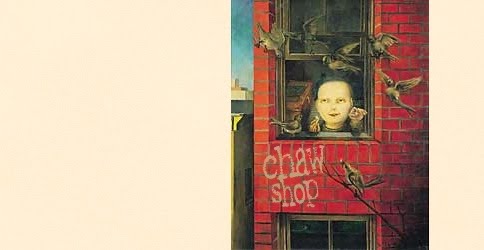
The face of contemporary difficult fiction?

But why is it that we seldom talk about difficulty – that we so frequently exclude it from the conversations we have about books?  One reason, the most obvious, is that no one wants to sound like an idiot, even if he feels like one.  But another, equally strong reason is that there's a perception (and not an unfounded one) in the contemporary writing community that our art form is dying, and that it's time to circle the wagons to protect our own.  The very worst thing to say is that a book is so tough to get through that even another professional writer had to struggle mightily to keep turning the pages.

I have a friend who occasionally writes poetry reviews for an online journal.  The editor of this journal told my friend, in so many words, that they do not publish negative reviews, not of any book, ever.  The Believer takes a similar tack, and I'm sure they're not alone.  The idea behind this behavior is of course that negative reviews discourage book sales, and no one wants that – better that readers should approach a work with inflated expectations than not approach it at all.  But I would imagine that the actual result of this is not that "average" (i.e., not professional) readers read more literary books – it's that they don't read literary books or the publications that review them.  They feel excluded from the conversation, and so they leave it entirely.

To a certain extent, this can't be helped.  The fact is, some people eventually lose interest in reading anything with more substance than an InStyle article.  I call these people "Philistines," but to each his own. (There are plenty of art forms I know fuck all about myself – architecture, modern dance – so clearly I'm throwing stones from the roof of a greenhouse.)  But what makes me sad are the people who still have a craving for fiction, but seek out and read only kids' books or trash.

Which brings me back, in a long way, to the subject of my last post.  I think there's something to what Lev Grossman said in in the otherwise heinous Pamela Paul NY Times article "The Kids' Books Are All Right," about the way that YA fiction allows plot to thrive, and I'm going to ponder that more when I write on here next.  But one thing that I feel sure YA fiction offers people is the feeling that they are qualified to take part in a conversation about it, that they won't embarrass themselves like poor Kevin McDonald.  And to me, the fact that things have come to that pass is something that should make all of us feel pretty stupid.

Saturday, October 24, 2009

"The imagination is a dying animal."


In my first post on this blog, I admitted that I do not entirely understand my own taste -- that sometimes I am moved beyond reason by writing or films or television or even advertisements that do not satisfy my own stringent criteria for greatness.  And I promised that, from time to time at least, rather than pretending to be a stainless priestess of high art, I would acknowledge and even try to articulate why I love the things I do.

I'm going to come right out and say it: I love the Kids in the Hall.  I love them beyond sense or reason.  I laugh every time I watch them, despite the fact that they're sometimes not funny.  Sometimes I laugh because they're not funny.  The summer before I left for college, Comedy Central played two episodes of Kids in the Hall every day in the afternoon.  I watched these episodes every day.  I also tape recorded them and have watched them repeatedly since then.  There are many TV series that I find sporadically entertaining, that I'll watch when they're on: South Park, the Wire, who the hell knows.  Fundamentally, though, it would make zero difference to me if these shows had never existed.  Not so with Kids in the Hall.  Kids in the Hall is my show.  Something in it speaks to me.

I once had a professor who told us that, when asked to name his influences, Borges listed a very strange assortment of authors, including Robert Louis Stevenson, who was considered something of a hack writer at the time (and is still regarded that way by many, despite the patina of age that has transformed several of his books into "classics").  This professor told us that our own work would benefit if we followed Borges's example.  Instead of copying the writers we saw as the most accomplished or influential, we should take our inspiration from the writers who excited us the most, regardless of what they actually had achieved.  In fact, if they were second-rate, so much the better.  That way, we'd be mining uncharted territory, rather than picking over the dust and nuggets left in a ghost town after the rush.

Obviously, this professor wasn't saying we should be inspired by the flawed techniques or sloppiness of these mediocrities.  He was saying, though, that respecting, say, the craft of Raymond Carver doesn't mean you have to write about realist characters getting divorces in laundromats.  This is a sentiment echoed by George Saunders in an interview.  After naming a handful of writers -- Gogol, Hemingway, Kafka -- whose influence he still feels, he goes on to say, "But I think also, lately, I'm starting to be more honest about the fact that there are a lot of TV influences and pop culture stuff in there too. You know, in a funny way I'm starting to rethink the whole influences thing. It feels to me like you're born with certain neurological tendencies or affinities, and then you just kind of walk through the world picking out the things that feed that."

As a writer, I understand this perfectly: in my own art anything goes.  If Kids in the Hall, or for that matter, the New Kids on the Block, inspire me, it doesn't matter; the only thing that counts is the end product of what I create.  But as someone who wants to write critically about narrative art, this troubles me.  How much of my experience of, say, Kids in the Hall, is a result of my "neurological tendencies or affinities," and how much is a result of my considered judgment?  And, if I admit that most of my experience is a result of these affinities, then what does that say about my opinion of a film or novel I regard as a masterpiece? 

Wittgenstein, to rope him into my arguments again, once wrote, "When I read over a poem or narrative with feeling, surely something goes on in me which does not go on when I merely skim the lines for information.  What process am I alluding to?  The sentences have a different ring."  When I first started dating my partner, I couldn't believe he didn't love Kids in the Hall.  I "told" him many of their jokes and sketches, which I had memorized, or nearly, and he generally thought they were funny.  When we watched the aforementioned videotapes together, though, back in my childhood home, he still didn't love it the way I did.  "They draw every joke out for way too long," he argued.  "And a lot of it just isn't that funny."

A teenager tells his uncaring parents, "You have carpet on your hearts."  A young man rhapsodizes about the legs of his lover as she stands in the water: "Like God's own barge poles."  A blues guitarist sings, "You can't use your tongue to stop a fan," and his back-up drummer sticks out his tongue to reveal a prominent band-aid.  A pyromaniac French woman pouts when her boss puts out a fire: "Monsieur!  Mon feu!"  A bearded lady declares, "We're freaks!  We can drink as much as we want!" and a confused waiter replies, "But don't you get drunk?"  "Of course," replies her companion, the Chicken Lady.  "My brain is only the size of a waaaalnut."  After writing this paragraph, I went to the Kids in the Hall Wikipedia site to look for more examples and laughed so hard I literally started crying.  But my partner has watched these episodes, and though he saw the same show I saw, he didn't see in it what I saw.  It didn't have the same ring.

I'd argue that, with a truly accomplished piece of art, it doesn't all just come down to the randomness of taste.  There are things we can point to, structurally and at the level of the sentence, that clearly denote a rigorous craftsmanship in the piece's design and execution.  But as much as I admire these qualities, and as fascinating as I think they are to talk and think about, they're not necessarily the reason I love the piece in question -- or at least not the reason I fell in love with it in the first place.

Who says a blog post has to have an ending?